
Often in life, people are so afraid to fail that they spend their lives running from it when actually, the greatest lessons you could ever learn in life are born from failure1.

Do you want to know more about how someone can overcome adversity? Has your child already faced adversity and you want to know more? This blog will aim to provide information that could help you to understand some of these things!
- What is adversity in the eyes of an athlete?
- What is the process for an athlete dealing with adversity?
- In what ways can an athlete grow following adversity?
“What doesn’t kill us makes us stronger”2 and “every cloud has a silver lining” are common inspiring statements, but how true are they? According to academic researchers and iconic celebrity figures4, adversities that cause trauma can ultimately have benefits.
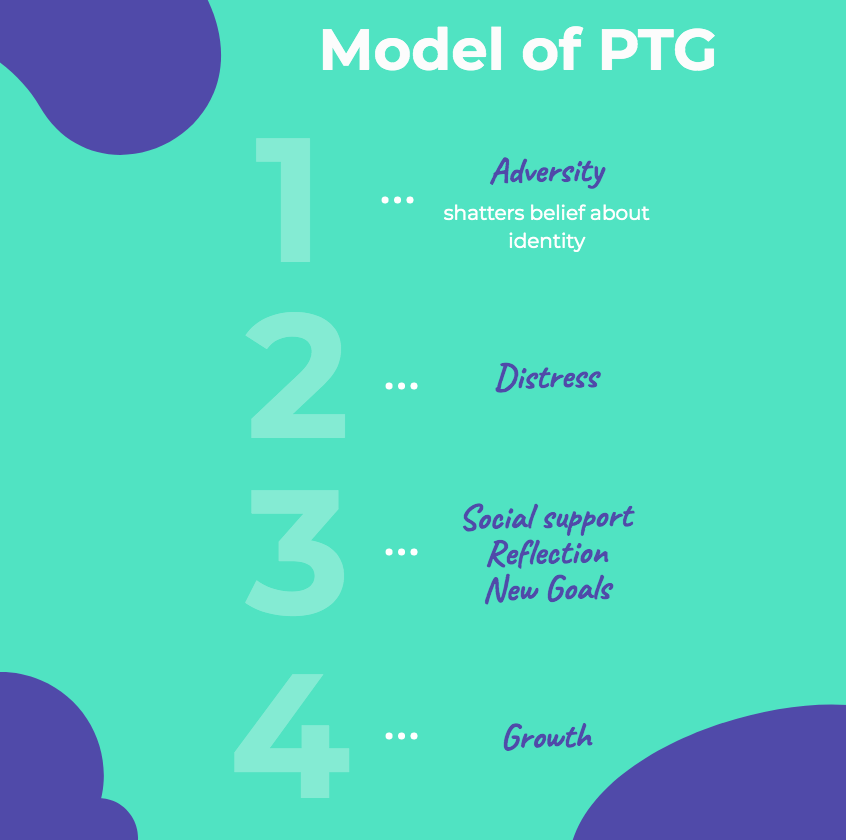
The academic model of post-traumatic growth was created to show the process of how positive change can occur as a result of struggling23 and real life examples show how incredibly successful people experienced adversity but found a way to succeed but how does growth arise?

Famous Failures4

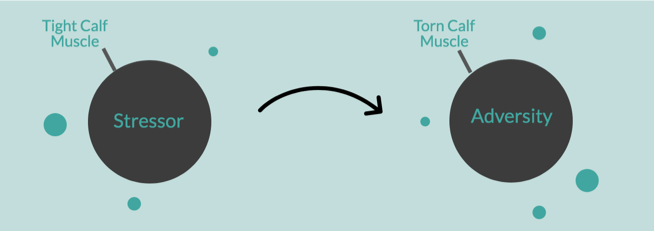
We all feel stressed from time to time – it’s normal and all part of life’s journey of ups and downs! ‘Stressors’ is the collective term used to describe an event that causes stress and stressors are the day-to-day environmental demands an individual experiences5. Some of the common stressors athletes face daily are linked to competitive performance, sporting organizations (politics) and personal (non-sporting) events5. Experiencing stress as an athlete is completely normal, very common and nothing to worry too much about HOWEVER, as soon as a stressor becomes too severe for an athlete to overcome, this is when it becomes adversity5. Adversity is defined academically as a negative life event that results in a person experiencing adjustment difficulties6. If an athlete can no longer physically or mentally cope with a situation they are presented with, this is called facing adversity.

As a parent of an athlete, it is good to be aware of the types of adversity you can expect your child to experience on their sporting journey7,8,9. As you can imagine these experiences will be rather troubling for most athletes, therefore, initial responses are likely to be very negative 10.
Olympic athletes responses to adversity11:
- “For the next year, I’d cry at the drop of a hat”
- “I was devastated. There’s no other way to put it…I was embarrassed”
- “My brain kept returning to that negative tape playing over and over”
DENIAL is a common responses to adversity9! It is very normal for an athlete to want to protect themselves against negative emotions and try to preserve their identity as a ‘strong athlete’. As a consequence, they may fail to acknowledge the impact of adversity, suppress emotions, show avoidance behaviours and fail to disclose information to their social support networks, such as parents8. “I’ll be fine”, “I didn’t like to express what was going on” and “oh whatever” are some statements Olympic swimmers used to describe their adversities9. Denial should be kept to a minimum as this hinders the ability to positively adapt to adversity however this emotion is normal and it’s important to remember that managing adversity should be done at a pace that is suitable for the athlete.
While adversity doesn’t seem too pleasant, it is recognized widely as part of a normal journey an elite level athlete experiences on their way to the top.

You’ll be glad to hear your child could grow, develop and become a better athlete after experiencing adversity providing that they have access to appropriate levels of support.

Andy Murray has appeared in 11 Gram Slam finals throughout his career with only three of them ending in victory. In an interview, Murray said “failing is not terrible14,” he described how each of his defeats against Novak Djokovic or Rodger Federer had contributed to his success and “learning from my losses is something I’ve done throughout most of my career14.”

Tennis superstar Serena Williams believes a sporting champion shouldn’t be defined by their wins but how they recover when they fail. Serena says, “I have fallen several times, each time I just get back up and dust myself off and pray I’m able to do better.” She suffered but survived a life-threatening illness only to come back and win Wimbledon15.
It is through the process of struggling with adversity that changes may occur that propel an individual to a higher level of functioning22 (physical, mental and personal). The process is known as ‘adversarial growth’22. Adversarial growth in elite-level athletes has been researched over the last decade and results have shown the powerful impact adversity can have on athletes11. After hearing the views of multiple Olympic athletes and Olympic champions, researchers have concluded that a variety of challenging experiences are essential for success12 and facilitate high-level performance13. One Olympic champion openly said, “if I hadn’t failed in Athens, I wouldn’t have succeeded in Beijing”8(p.7). This opinion isn’t unique to academia, as many top-level athletes have spoken out about how adversity has affected them but subsequently how they have benefited from it.
When an athlete faces adversity their immediate reaction is to be a negative (which is ok!) but this is where your role as a supportive parent comes in. This article isn’t asking you to change this initial response, it’s a normal reaction to a distressing experience however, as a parent understanding and conveying how your child can benefit from their adversity will minimize time spent in the negative phase and help springboard athletes into growth phase – you can read more about this in the last section!
How an athlete grows following adversity has been investigated extensively and research has suggested there are 3 main areas of growth16.
Intrapersonal = a change in mindset including increased learning and knowledge, healthier emotions and higher motivation.
Interpersonal = a change in relationships and communication towards others.
Physical = a change in physical attributes and related to engagement in sport.
- Intrapersonal
An improvement in an athlete’s mindset is the most noticeable area of growth in terms of frequency across the literature. Gaining knowledge and learning more about the sport is often witnessed following adversity, specifically increased mental toughness and mental resilience, a realization of opportunities, improved problem solving and sport-related intelligence16. Positive emotional changes are common after experiencing adversity including heightened enjoyment, confidence, motivation, optimism, feeling happier and more grateful, also known as an ‘emotional rebound’17. Interestingly enhanced life meaning, adopting a new life philosophy and new appreciation and outlook on sport is another way in which athlete’s grow16.
“I appreciated every minute I got to play after that, every bit of training18”
“I looked at it in a positive way, instead of dwelling, looked at different roads to explore18”
- Interpersonal
Positive day-to-day changes in how athletes interact and approach others improve following adversity. Greater appreciation for others, being able to speak out and enhanced relationships with family and friends are the changes frequently identified16.
“I felt wonderful, realizing that I had never loved my family as much or felt closer to them as I did in my life. The incredible thing was they had been there all along11”.
- Physical
Athletes can become physically better! You may think suffering trauma especially injury would result in physical deterioration but this is not the case. It is highlighted that better athletic functioning, superior performance and increased strength and fitness is often achieved after adversity16.
“I did a lot of strength work” 19
“I came back a much stronger runner than before”19
Experiencing adversity alone isn’t enough for growth to occur, what is more important is how we deal with adversity, as this is the determining factor on whether growth occurs3.

So what do we know so far?
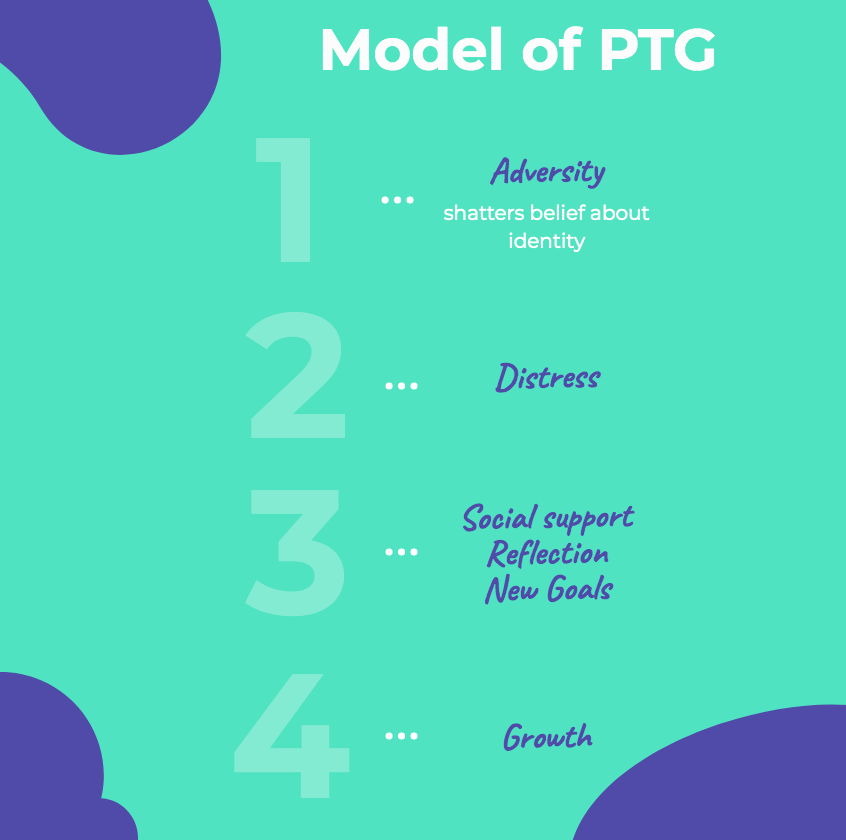
We have addressed most of the PTG model23 so if you’re an athlete competing in sport, you are going to experience adversity and this is going to result in initial negative responses. However, as a result of experiencing adversity, an athlete usually becomes better in multiple capacities.
What we haven’t looked at is the final component of the PTG model, moving from distress to growth.
Research in this area has identified a secondary response to adversity called the “transitional response”11, whereby negative responses to adversity are transformed into growth through utilizing multiple personal (internal) and situational (external) coping strategies16. Whether an athlete can implement these various coping strategies is without a doubt the determining factor as to whether growth occurs! The majority of elite athletes seem to possess the ability to naturally adopt some of these strategies without the help of others (but even some of the worlds best struggle!9) therefore logically, younger, more inexperienced athletes need a helping hand in applying these strategies into daily life once an adversity occurs to help with the growth process.
The most common ways for elite athletes to seek help is through a sport psychologist and coaches but also family members9 and this is why you as parents are so important in this process! Below are the most beneficial coping strategies athletes should utilize to help them overcome adversities.
- Personal (internal)
The ability of an athlete to cast aside the overriding feelings of denial and negativity and search for meaning in the adversity they have experienced is very important. The process of searching for meaning although can be tough itself leads to acceptance of what has happened, allowing them to deal with it and plan for the future9.
Athletes who can adopt a positive outlook after their adversity, are more likely to experience behaviour changes that will be helpful in the future (confident, optimistic, inspired, uplifted and hopeful). These positive emotions inspire athletes to seek additional knowledge about sport and work on other aspects of training19.
Engaging in a purposeful reflection of the adversity has many benefits for an athlete. For example, using the negative emotions as motivation to return to sport stronger19. Reflecting upon what matters to an athlete helps with growth; athletes describe how after taking some time away from their sport to reflect helps them to realize how much they love and enjoy it18.
- Situational (external)
Whether it is coaches giving advice and communicating knowledge or family and friends being a shoulder to cry on, social support is one of the most recognized indicators as to whether an athlete can grow from suffering adversity. The importance of support from family, friends and coaches is stressed throughout the academic literature from all elite athletes18.
Having accessible physical and informational resources can be crucial for allowing an athlete to grow following adversity. The internet and television can be useful tools as educational material or inspirational stories, athletes have mentioned how YouTube videos gave them useful information on rehab exercises. Another important factor is ensuring an athlete has transportation, having access to social support during this period is essential to maintain positive emotions and access to sports facilities so training/rehabilitation can take place to maintain motivation and commitment19.
You would think the last thing an athlete wants to do is be around the sport that as caused their adversity, however, research has shown that having this continual access to sport has shown to be beneficial for athletes. It gives them a sense of empowerment, allows them to re-establish their identity and gives them a safe place or sanctuary to escape the impact of the adversity11.
The parent’s role!

Help your child25
When someone asks an elite athlete, “so who was your role model growing up”, you will hear, Usain Bolt, Michael Phelps, David Beckham but you know who else is very common PARENTS! You are massive role models in your children’s lives, and by addressing their concerns, sharing their lives and maintaining a constructive perspective, you can contribute to their growth and development and play a pivotal part in them overcoming adversity20.
The chances are your sporty child may need a little extra help in adopting these coping strategies and your role, as a parent is to SUPPORT them where appropriate. Here are some tips to help your children work through adversity to grow21.
- Encouragement. Encourage your child to face their problems and help them in finding solutions.
- Provide opportunities. Help them get involved in their sport and promote volunteer work in that community. Children feel empowered by helping others and it gives them a sense of responsibility.
- Positivity. Promoting positivity can help them see the good in a situation and push them forwards even when it may seem difficult.
- Set goals. Celebrate their achievements every time they reach a goal. Point out the hard work and decisions they made along the way. Promote process goals not outcome.
- Approachable. Make yourself accessible for support, show empathy and that you understand their situation. It is important that your child feels comfortable coming to you for help.
Hopefully, now you as parents know what sporting adversities their child may face and the negative emotions associated with them, that adversity isn’t bad and their child can develop positively following adversity and lastly how by using the PTG model, parents can help facilitate this growth in their child.
References
1 5 reasons why everything happens for a reason in life. [online]. Wanderlust Worker. [viewed 1/12/19]. Available from: https://www.wanderlustworker.com/5-reasons-why-everything-happens-for-a-reason-in-life/
2 Collins, T. (2017). Setbacks really DO make you stronger: Athletes who have experienced some adversity in their lives perform much better under pressure. Mail Online, [online]. Available from: https://www.dailymail.co.uk/sciencetech/article-4728212/Athletes-experienced-adversity-perform-better.html [Accessed 06/11/2019].
3 SPA EXPERIENCE, 2017. Overcome your adversity and increase your happiness! In: better [online]. [viewed 27/11/2019]. Available from https://www.spaexperience.org.uk/about/blog/detail/our-blog/2017/09/21/overcome-your-adversity-and-increase-your-happiness!
4 Famous Failures, 2012. [YouTube]. Directed by Motivated Success. Available from: https://www.youtube.com/watch?v=zLYECIjmnQs&t=36s
5 Fletcher, D., Hanton, S., and Mellalieu, S.D., 2006. An organizational stress review: Conceptual and theoretical issues in competitive sport. In: S. Hanton and S.D. Mellalieu ed. Literature reviews in Sport Psychology. Hauppauge, NY: Nova Science, p. 321-374.
6 Luther, S.S., and Cicchetti, D., 2000. The construct of resilience: Implications for interventions and social policies. Development and Psychopathology, 12, 857 – 885.
7 Fletcher, D., and Sarkar, M. A., 2012. A grounded theory of psychological resilience in Olympic champions. Psychology of Sport and Exercise, 13(1), 669 – 678.
8 Sarkar, M., Fletcher, D., and Brown, D.J., 2015. What doesn’t kill me…: adversity-related experiences are vital in the development of superior Olympic performance. Journal of Science and Medicine in Sport, 18(4), 475 – 479.
9 Howells, K., and Fletcher, D., 2016. Adversarial growth in Olympic swimmers: Constructive reality or illusory self-deception? Journal of Sport and Exercise Psychology, 38(1), 173 – 186.
10 Athletics Weekly, 2019. Research report: Holly Bradshaw on overcoming adversity [online]. [viewed 06/11/2019]. Available from: https://www.athleticsweekly.com/performance/research-report-holly-bradshaw-on-overcoming-adversity-1039920055/
11 Howells, K., and Fletcher, D., 2015. Sink or swim: Adversity and growth related experiences in Olympic swimming champions. Psychology of Sport and Exercises, 16, 37 – 48.
12 Sarkar, M., and Fletcher, D., 2017. Adversity-related experiences are essential for Olympic success: Additional evidence and considerations. In Progress in brain research (Vol. 232, 159-165). Elsevier.
13 Collins, D., and MacNamara, A., 2012. The rocky road to the top: Why talent needs trauma. Sports Medicine, 42(11), 907 – 914.
14 BBC Sport, 2016. Andy Murray: Wimbledon champion says ‘best tennis is ahead of me’. [online]. [viewed 06/11/2019]. Available from: https://www.bbc.co.uk/sport/tennis/36760511
15 CHIDLEY, R. Resilience – The role of adversity. In: Believe Perform, [online]. Available from: https://believeperform.com/resilience-the-role-of-adversity/ [Accessed 06/11/2019].
16 Howells, K., Sarkar, M., and Fletcher, D., 2017. Can athletes benefit from difficulty? A systematic review of growth following adversity in competitive sport. Progress in Brain Research, 234, 117 – 159.
17 Galli, N., and Reel, J.J., 2012. Can good come from bad? An examination of adversarial growth in Division 1 NCAA athletes. Journal of Intercollegiate Sport, 5(2), 199 – 212.
18 Galli, N., and Vealey, R. S., 2008. Bouncing back from adversity: athletes’ experiences of resilience. The Sport Psychologist, 22(3), 316 – 335.
19 Roy-Davis, K., Wadey, R., and Evans, L., 2017. A grounded theory of sport injury-related growth. Sport, Exercise and Performance Psychology, 6(1), 35.
20 BLOOM, S, 2018. The importance of parents as role models. In: Livestrong.com. [viewed 1.12.19]. Available from: https://www.livestrong.com/article/110276-importance-parents-role-models/
21 CHRISTINE, 2018. How to help your child work through adversity. In: families of character [online]. [viewed 1/12/19]. Available from: https://www.familiesofcharacter.com/devblog10809/2018/7/7/how-to-help-your-child-work-through-adversity
22 Linley, A., and Joseph, S., 2004. Positive change following trauma and adversity: A review. Journal of Traumatic Stress, 17(1), 11 – 21.
23 Tedeschi, R.G., and Calhoun, L.G., 2004. Posttraumatic growth: Conceptual foundations and empirical evidence. Psychological Inquiry, 15(1), 1 – 18.
24 How to be less selfish. Digital Image. The Next Web. 16th August 2014. Available from: https://thenextweb.com/socialmedia/2014/08/16/be-less-selfish/
25 How to help your child work through adversity. Digital Image. Families of Character. 18th July 2018. Available from: https://www.familiesofcharacter.com/devblog10809/2018/7/7/how-to-help-your-child-work-through-adversity
26 Everything happens for a reason, probably a good one. Digital Image. Medium. 22nd May 2018. Available from: https://medium.com/@nabanitadhar/everything-happens-for-a-reason-probably-a-good-one-938b8f30d603
 Adversity